What Is FF&E? FF&E vs OS&E, Explained for Hotel and Commercial Projects
FF&E is the furniture, fixtures and equipment that turn a finished building into a working hotel, office or restaurant. Here is what it includes, how it differs from OS&E, and how it gets from the factory to the room.
 Guides & Ideas
FF&E stands for furniture, fixtures and equipment: the movable items that furnish a building once construction is finished, such as beds, desks, lounge chairs, lamps, mirrors, artwork and televisions. That is the FF&E meaning on hotel, office, restaurant and healthcare projects, and it is why FF&E gets its own budget, its own schedule and its own delivery plan. This guide covers what counts as FF&E, how it differs from OS&E and from "fixtures" in a property sale, what it looks like on different projects, and where logistics fits between the factory and the room.
FF&E means furniture, fixtures and equipment: the movable, non-structural items that furnish a hotel, office or other commercial space, from beds and desks to decorative lighting and art. OS&E means operating supplies and equipment: the smaller items a business uses up and restocks, such as linens, glassware and uniforms.
What counts as FF&E?
FF&E is everything that furnishes and equips a space without being part of the building itself. The three words split it roughly like this:
- Furniture: beds, sofas, lounge chairs, desks, dining tables, booths, bar stools, dressers and shelving.
- Fixtures: items that are installed but can come out again, such as decorative lighting, chandeliers, mirrors, artwork and window treatments.
- Equipment: the machines and electronics a space needs to work, such as guestroom televisions, computers, monitors and printers.
A common rule of thumb: picture the building turned upside down and shaken. Whatever falls out is FF&E. Whatever stays put, such as walls, doors, built-in cabinetry, plumbing, heating and cooling, and hardwired electrical, belongs to the construction work. The line is not identical on every project. A built-in banquette or a hotel's kitchen equipment can land on either side, so the project's scope documents decide, and it is worth settling before anything is ordered.
FF&E vs OS&E: what is the difference?
OS&E stands for operating supplies and equipment. FF&E is what a space is furnished with; OS&E is what the business uses to run it every day. The term comes up most in hotels and restaurants, where both are bought for an opening or a renovation, often by different people.
| FF&E | OS&E | |
|---|---|---|
| Stands for | Furniture, fixtures and equipment | Operating supplies and equipment |
| Hotel examples | Headboards, nightstands, desks, lounge seating, lamps, mirrors, art, guestroom TVs | Bed linens, towels, glassware, china, flatware, uniforms, housekeeping carts, guest toiletries |
| How long it lasts | Several years, until the next renovation | Wears out or is used up and restocked |
| Who usually chooses it | The interior designer and owner, early in the project | The operator, the general manager and department heads |
| How it is usually accounted for | A capital asset, depreciated over its useful life | An operating cost |
| How it usually arrives | Large, often crated or blanket-wrapped pieces from many vendors, needing receiving, storage and an installation crew | Cartons that go to back-of-house storerooms and are unpacked by hotel staff |
The accounting row is the usual practice, not a rule. In accounting, FF&E is an asset that depreciates over the years it is in use, but how your project classifies a gray-area item, such as mattresses or a coffee machine, is a question for your accountant and the brand standard. Agree on the list early: an item that sits in neither budget is the one nobody orders.
Planning a hotel opening or a commercial fit-out? Send us the FF&E list and the install dates, and we'll respond within 24 hours.
Get a free quote →FF&E vs "fixtures" in real estate
The word "fixture" means something different in a property sale. In real estate law, a fixture is an item that was once movable but has been attached to a building so firmly that it becomes part of the property. Unless the sale contract says otherwise, a fixture normally stays with the property when it is sold, and each state can set its own test for what qualifies.
So a toilet, a built-in vanity or a hardwired ceiling light is a fixture in the real-estate sense, and usually part of the construction scope. The "F" in FF&E means something narrower: decorative pieces that are installed but designed to come out again at the next renovation, such as a chandelier, a framed mirror or a floor lamp. Because FF&E is movable, sale and lease documents for hotels and commercial buildings often list and value it separately from the building.
FF&E examples by project type
Every commercial project has FF&E, but the mix, and what makes it hard to deliver, changes with the building.
| Project | Typical FF&E | What makes delivery and installation hard |
|---|---|---|
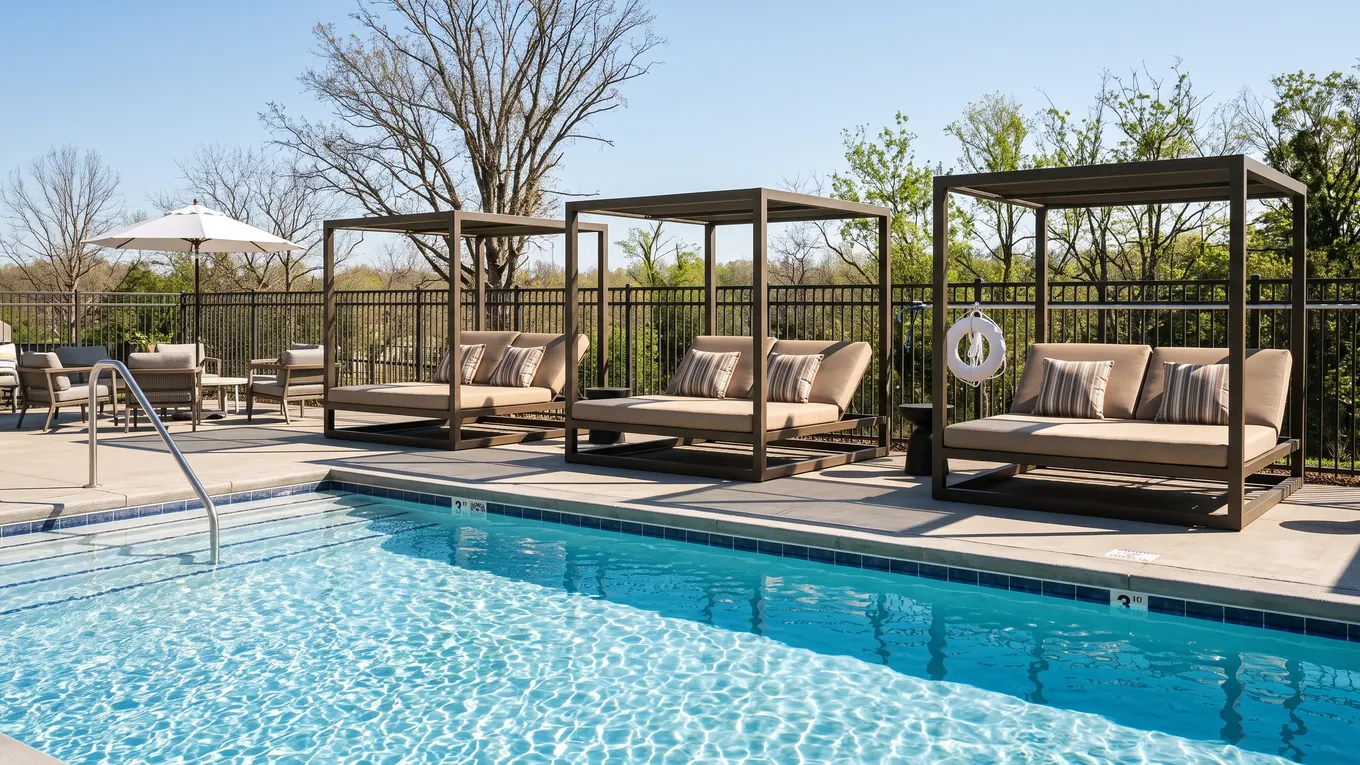
| Hotels and resorts | Case goods (headboards, nightstands, dressers, desks), mattresses, lounge seating, lamps, mirrors, art, guestroom TVs | Hundreds of near-identical room sets; renovations often happen while the hotel stays open |
| Offices | Workstations, task chairs, conference tables, storage, lounge and breakout furniture | Installs in phases, often after hours, so the office keeps working |
| Restaurants | Dining tables and chairs, booths, bar stools, host stand, decorative lighting | A fixed opening date, and a dining room that has to be finished in one push |
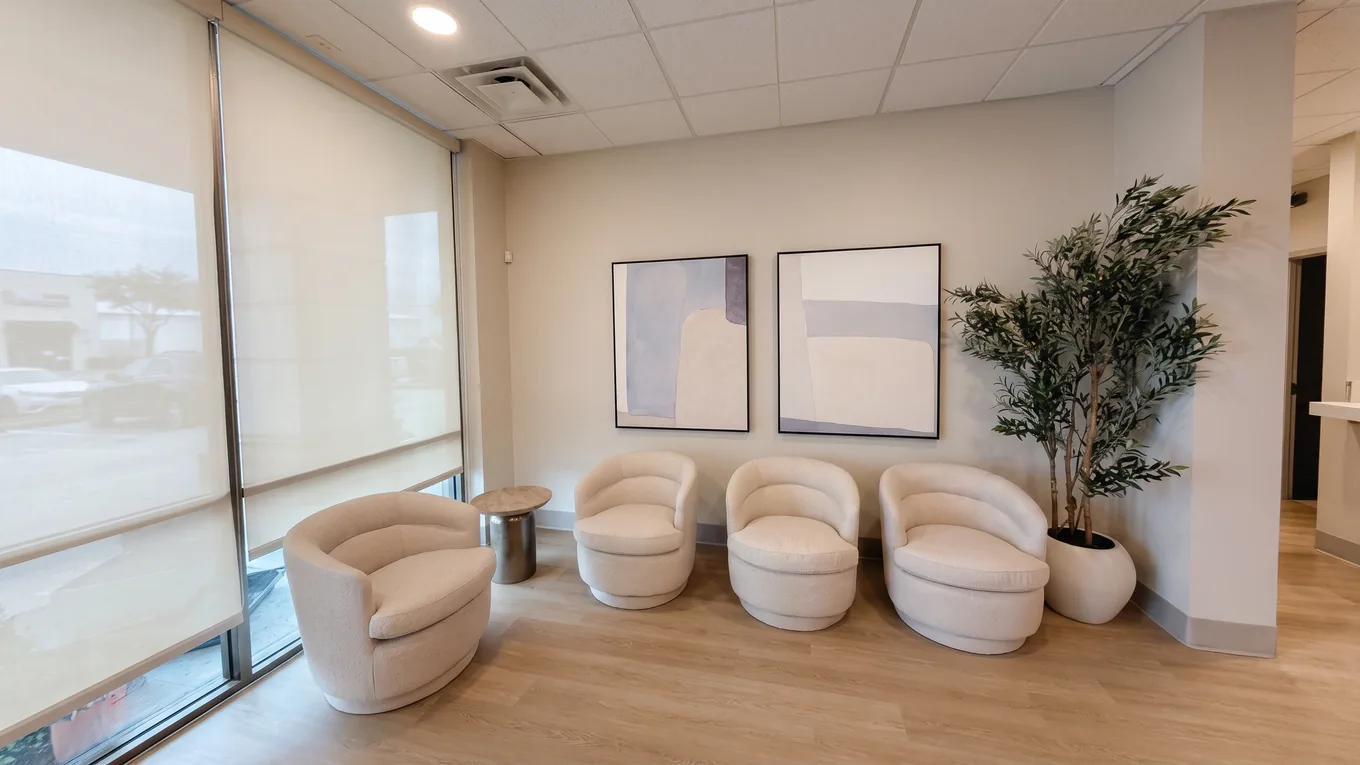
| Healthcare and med spas | Waiting-room seating, consult-room furniture, side tables, art, rugs | Several sites that share one design, so pieces are easy to send to the wrong address |
| Multifamily amenity spaces | Lounge seating, booths, communal tables, game tables, shelving, rugs, art | Many small zones on one floor, each furnished differently |
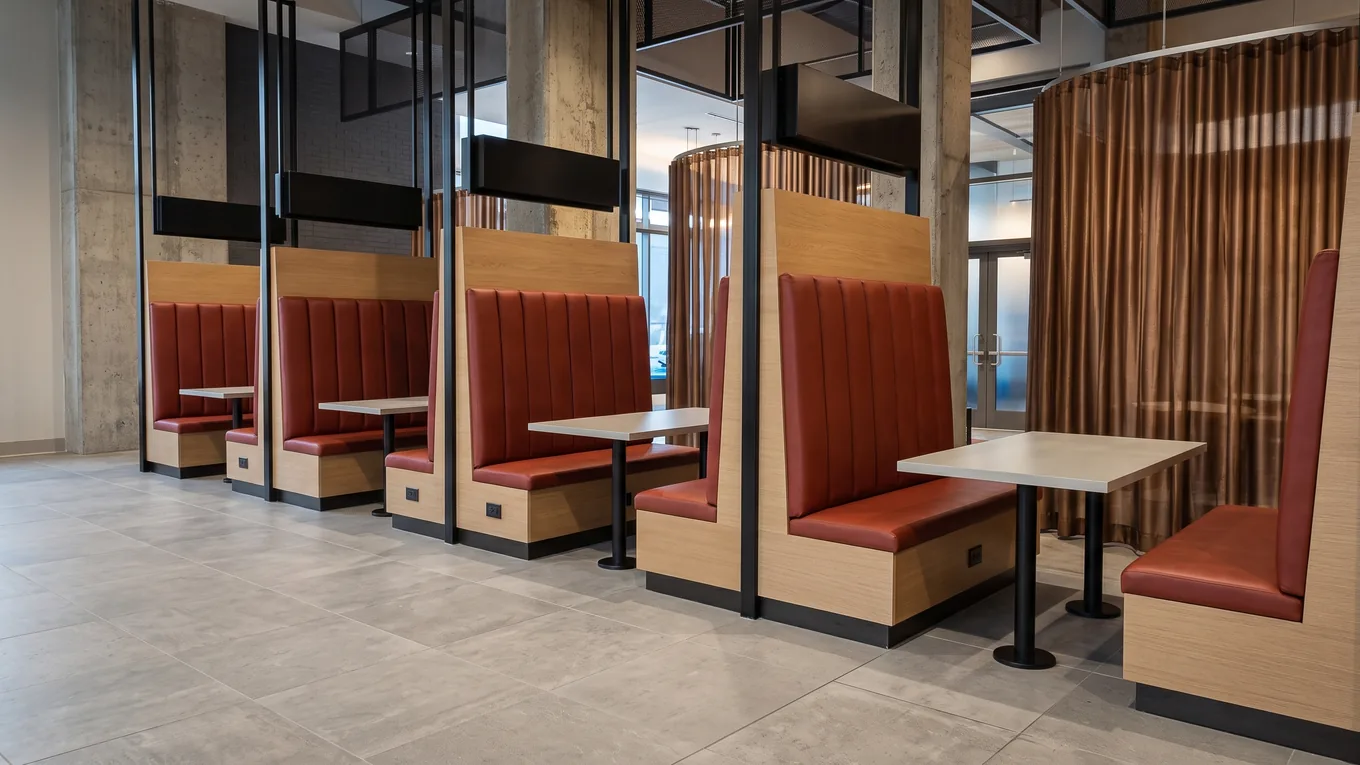
Two of these are on our case-study list. In Falls Church, Virginia, our Washington DC team installed 224 pieces of amenity furniture across an apartment building's amenity floor, from booths and lounge pods to a game room. In Texas, furniture for eight med spa locations came through one warehouse, was sorted by site against the designer's list, and was delivered and installed across the Dallas and Houston areas.
How FF&E is budgeted, specified and bought
FF&E is usually budgeted and bought separately from the construction contract. The owner holds the FF&E budget; the general contractor builds the space; the furniture arrives through a different chain of people.
- The budget. Set early, often line by line from the design. Hotels also save for the next round: management agreements commonly require an FF&E reserve, money set aside from revenue to replace furniture and equipment as it wears out. One hotel's filing with the SEC, for example, describes a reserve of 4.0% of gross revenues. Your own agreement sets your figure.
- The FF&E schedule. The master list of every item: its code, description, room or area, quantity, finish, vendor and expected ship date. On a hotel, it is the document everyone works from, including the warehouse.
- Specification and procurement. The designer specifies each piece. A purchasing agent or procurement firm places the orders, tracks production and arranges shipping. Layer, which makes FF&E software, lays out six phases: schematic design, specification, client presentation, procurement, delivery with installation and punch list, then handover.
- The schedule. Lead times differ from item to item, and custom pieces usually take longest, so goods arrive over weeks or months, not on one day. Ask each vendor for its lead time and build the install date around the slowest item.
Where logistics fits: from the factory to the room
Between the purchase order and the finished room sits the part of FF&E most budgets underestimate. Dozens of vendors ship on their own dates to a site that usually is not ready to take them. This is the work we do on FF&E logistics projects, in the order it happens:
- Receiving. Vendors ship to one receiving warehouse instead of the site. Each arrival is barcoded, photographed in its packaging and condition-checked against the list you sent us, and we ask for the bill of lading to see what each vendor actually put on the truck. If packaging arrives damaged, we tell you before anything is stored and you decide whether we open it. Cartons are opened and inspected when you ask, free of charge. Around two shipments in ten arrive unannounced; we trace each one through the carrier or sender. Our receiving warehouse for hotels page covers this step for hotel projects.
- Consolidation. Everything for one project is held together, then sorted by property, floor or room, so the right set goes out on the right day.
- Storage. The package waits in climate-controlled, secured space with humidity and pest control, for weeks or for the length of a phased renovation, with no minimum period. Item records, condition photos and inventory status are kept in Terminal, our warehouse system, so your team can see what has arrived and what is still on the way.
- Staging and scheduling. Goods are released in install order, floor by floor or site by site. We provide the certificate of insurance and book the freight elevator and loading window with the building; our building prep guide explains what buildings ask for. Big projects can run over several days, and we plan that with you in advance.
- Delivery and installation. Crews protect the route in, then carry, assemble, place and level each piece, and hang art, mirrors and light fixtures (wiring stays with your electrician). In a hotel that stays open, crews work around guests. Packaging leaves with the crew, each piece is photographed at delivery, and you are asked to report any damage before sign-off. Our white glove installation page covers the installation side in detail.
Resorts and clubs have more to plan around, such as events, occupied villas and seasonal peaks; our hospitality FF&E page covers those projects.
A short FF&E glossary
- Case goods: hard furniture built as a box or frame, usually wood, such as dressers, nightstands, desks, wardrobes and headboards. The opposite of upholstered seating.
- OS&E: operating supplies and equipment, the items a business uses up and restocks.
- FF&E schedule: the master list of every FF&E item on a project.
- Sidemark: a label on each carton naming the project and room, so the receiver can match it without opening it.
- Bill of lading: the carrier's shipping document listing what was loaded.
- PIP: a property improvement plan, a hotel brand's list of required upgrades, which often includes new FF&E.
- Punch list: the final list of fixes and missing items before handover.
What to send your FF&E logistics partner
The more of this a receiving warehouse has before the first truck arrives, the fewer surprises on install day:
- The FF&E schedule, with room or area for each item.
- The vendor list and expected ship dates, and an instruction to every vendor to put the project sidemark on each carton.
- The site address, delivery hours, access rules and the building's certificate of insurance requirements.
- The install dates and phases, and who will meet the crew on site.
Elite Anywhere receives FF&E at 34 warehouse locations, 10 of them our own staffed hubs, so each property on a rollout can ship to the location that serves its market. Receiving runs Monday to Friday, 9am to 3pm, by appointment. Send us the list and the dates, and we'll respond within 24 hours.
Quick answers
What does FF&E stand for?
What is the difference between FF&E and OS&E?
What does OS&E stand for?
What are examples of FF&E?
What does FF&E mean in construction?
What does FF&E mean in real estate?
What is FF&E procurement?

Director of Operations at Elite Anywhere. Elite Anywhere runs receiving, storage, white-glove delivery, and installation for designers, brands, and private clients nationwide.
Explore Guides & Ideas →