
How to Move a Refrigerator During a Relocation
Empty it, keep it upright, and let it settle — plus a dolly, two people, and the doorway math. Here's the safe way to move a fridge, and when it's worth handing off to pros.

 White Glove & Delivery
Knowing how to move a refrigerator during a relocation comes down to three rules: empty and defrost it a full day ahead, keep it upright the entire way, and let it stand and settle before you plug it back in. A refrigerator is often the single heaviest, most fragile appliance in your home — 250 to 350 pounds of compressor, coils, and sealed refrigerant — so a little prep prevents an expensive repair.
Defrost and dry it the day before, move it strapped upright on an appliance dolly (never flat on its back), and after arrival let it stand upright for a few hours before turning it on. Those three steps prevent the most common — and costliest — moving damage.
Before moving day: prep your refrigerator
Most refrigerator damage happens before the fridge ever reaches the truck. Start a day ahead:
- Empty it — remove all food, then take out shelves, drawers, and bins so nothing shifts or shatters.
- Defrost and dry. Unplug it 8–24 hours out, prop the doors open, and wipe up melt water so it doesn't leak or grow mildew in transit.
- Clean and secure. Wipe surfaces, then tape or bungee the doors shut and coil the power cord against the back so it can't snag.
- Measure the path. Check the fridge's width against every doorway, hallway, and the truck opening before you lift — surprises at a doorway are how people get hurt.
How to move a refrigerator safely
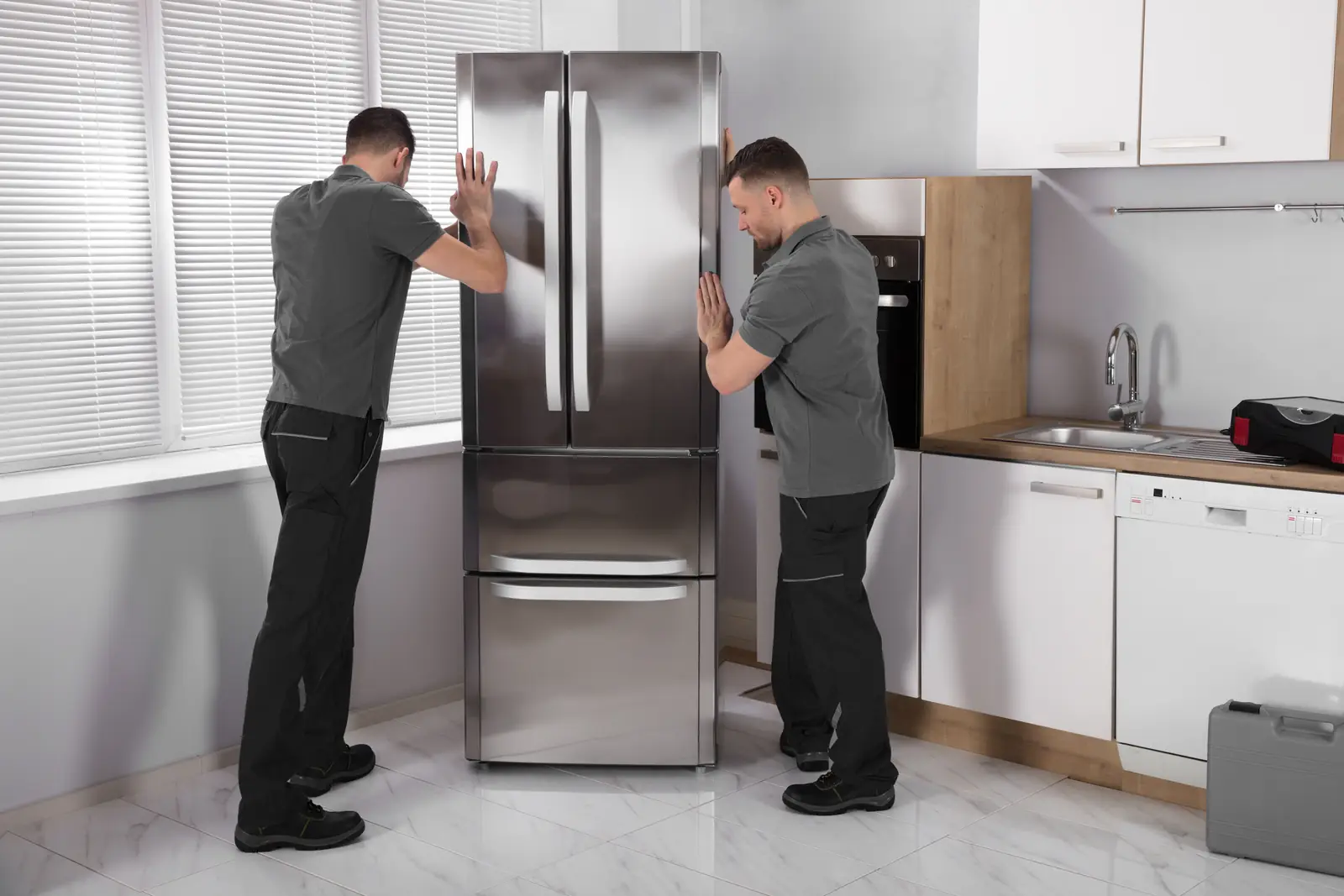
Moving day is a two-person job with the right gear. You'll want an appliance dolly (a hand truck with a strap), moving straps or rope, and furniture blankets.
- Slide the dolly under the side of the fridge — not the front — and ratchet the strap tight across the body.
- Tilt it back gently and keep the tilt shallow; one person steers the dolly, the other spots and steadies.
- Take doorways and ramps slowly, and never let the fridge get ahead of you on an incline.
- In the truck, load it upright against a wall, blanket-wrapped, and strap it in place so it can't tip or slide.
This is the same careful handling we apply to any large appliance in our home goods delivery service — controlled tilt, secured load, protected surfaces.
Rather not wrestle the fridge yourself? Get a fast, free white-glove moving quote — no obligation.
Get a free quote →Can you lay a refrigerator down?
Keep it upright whenever possible. Laying a refrigerator on its side or back lets the compressor oil migrate into the cooling lines, and running it before that oil drains back can damage the system. If the fridge must be tilted to fit — some transports leave no choice — lay it on its side (never its back or front), and note how long it was down.
After the move, stand it upright and let it settle before powering on: most manufacturers recommend letting it rest roughly as long as it spent tilted — and if it traveled flat, giving it several hours to a full day upright is the safe bet. When in doubt, wait longer; the compressor is the expensive part.
When to hire a pro: refrigerator moving cost
Plenty of people move a fridge themselves. But a built-in unit, a tight staircase, a high-end appliance, or a long-distance relocation changes the math — a single dented panel or a failed compressor can cost more than the whole move. That's when handing it to a professional crew pays for itself.
The question isn't whether you can move a refrigerator yourself — it's whether the risk to a $2,000+ appliance (and your back) is worth the savings on a single item.
Professional pricing depends on weight, access, stairs, and distance, so it's worth getting a quick quote before you commit to the DIY route. Our white-glove moving service handles appliances upright, padded, and installed at the destination — and if you're planning a bigger move, our tips to reduce long-distance moving cost and our white-glove movers overview are good next reads.
Quick answers.
How hard is it to relocate a refrigerator?
How long does a fridge need to sit before moving?
Can you lay a fridge down when you're transporting it?
How much does it cost to have a refrigerator moved?
Director of Operations · Moving & White-Glove Logistics at Elite Anywhere. Elite Anywhere runs receiving, storage, white-glove delivery, and installation for designers, brands, and private clients nationwide.
Explore White Glove & Delivery →