What Are Case Goods? Meaning, Examples, and Hotel vs Home Case Goods
Case goods are the dressers, nightstands, desks and cabinets of the furniture world: hard pieces built around a box. Here is what the term covers, how it differs from soft goods and FF&E, how hotel case goods differ from the ones in a home, and what it takes to get them into the room in one piece.
 Guides & Ideas
Case goods are hard, non-upholstered furniture built around a box, or "case": dressers, nightstands, desks, wardrobes, cabinets, bookcases, credenzas and sideboards. The term comes from the furniture trade and is used most by furniture makers, interior designers and hotel procurement teams, who sort every order into case goods and soft goods. This guide explains the case goods meaning, gives examples room by room, compares case goods with soft goods and FF&E, sets hotel case goods beside the ones in a home, and covers why these pieces need careful handling on the way to the room.
Case goods (also written casegoods) are furniture pieces built as a rigid box from wood, engineered wood, metal, stone or glass, meant to store or hold things rather than to sit or lie on. Dressers, nightstands, desks, wardrobes and cabinets are case goods. Sofas, upholstered chairs, mattresses and drapery are soft goods.
What are case goods?
The "case" is the body of the piece: a top, two sides, a bottom and usually a back, joined into a box. Furniture makers call that box the carcass. Drawers, doors and shelves fit inside it, and a finish or veneer goes over it. Anything built on that principle counts, whatever its style or size, from a small bedside chest to a media unit that runs the length of a wall.
What decides it is construction and job, not material. A case good stores, displays or supports things. It has no springs, foam or fabric to speak of. A wood-framed armchair is not a case good, because its job is seating and its comfort comes from a cushion; a metal filing cabinet is, because it is a box built to hold things.
You will see the word written three ways: case goods, casegoods and case-goods. They mean the same thing. Hotel and contract furniture makers tend to use "casegoods" as one word; dictionaries and retailers more often split it. A single item is sometimes called a "case piece".
Examples of case goods, room by room
| Room or space | Typical case goods |
|---|---|
| Bedroom | Dressers, chests of drawers, nightstands, armoires, wardrobes, wood bed frames and headboards |
| Living and dining room | Sideboards, buffets, credenzas, china cabinets, hutches, bookcases, media consoles, bar cabinets |
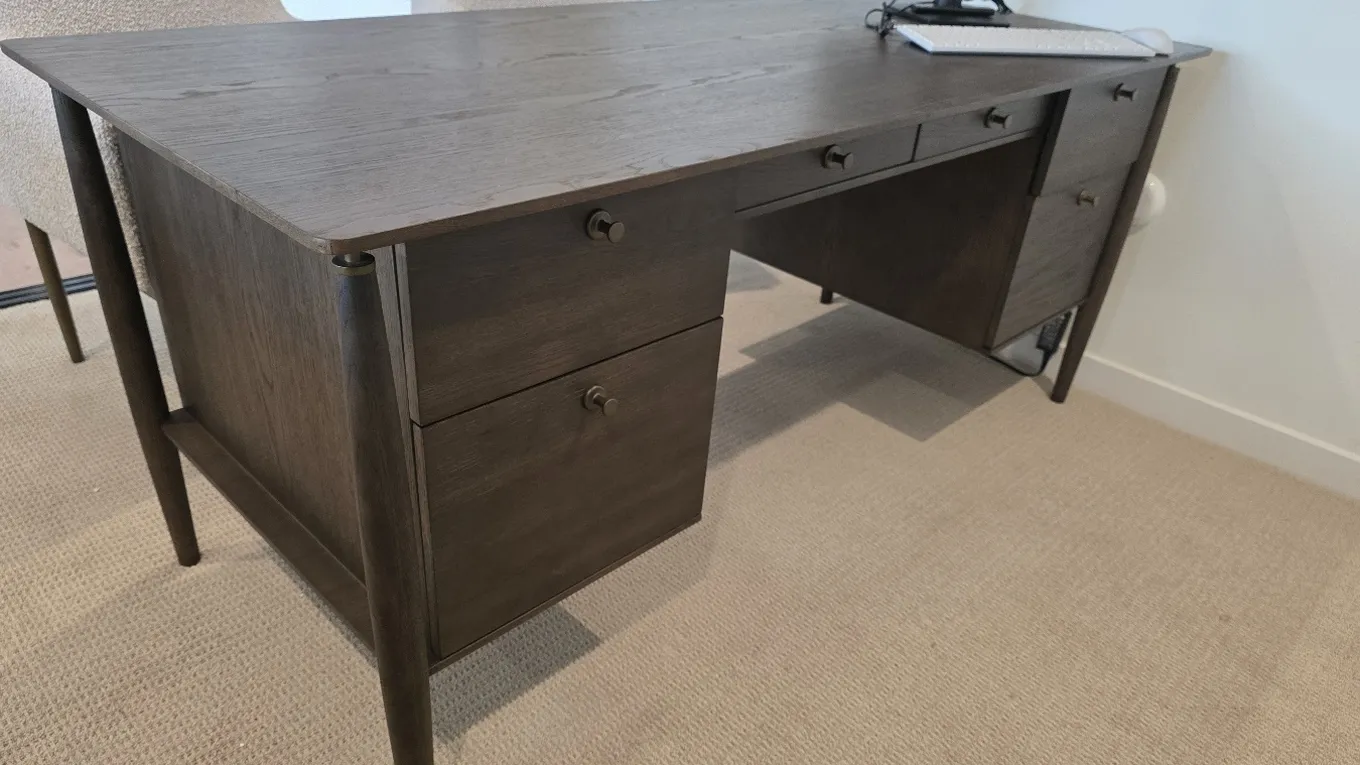
| Home office and workplace | Desks, returns, filing cabinets, storage towers, reception desks |
| Hotel guest room | Headboard panels, nightstands, a dresser or TV console, a desk, an open closet or wardrobe, a luggage bench, sometimes a vanity |
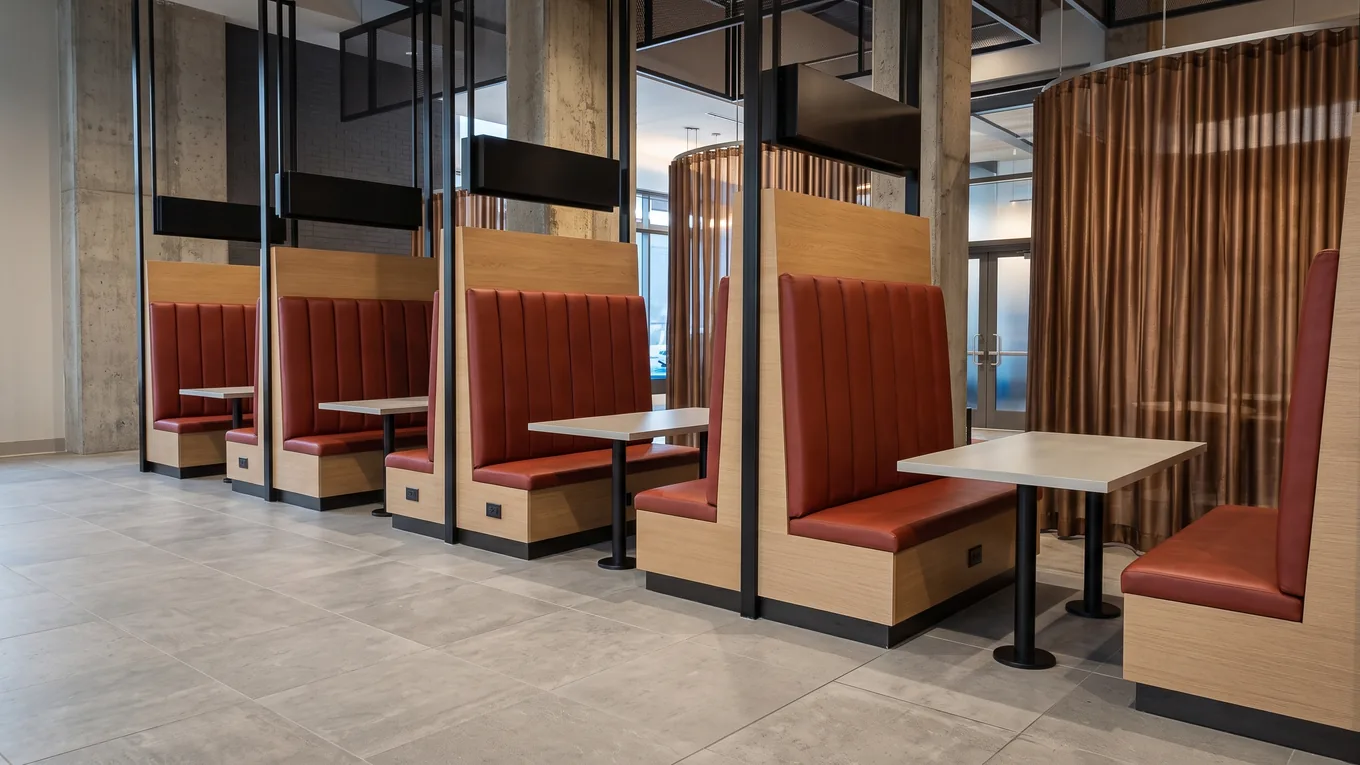
| Hotel public areas and restaurants | Front desks, host stands, back bars, display cabinets, server stations |
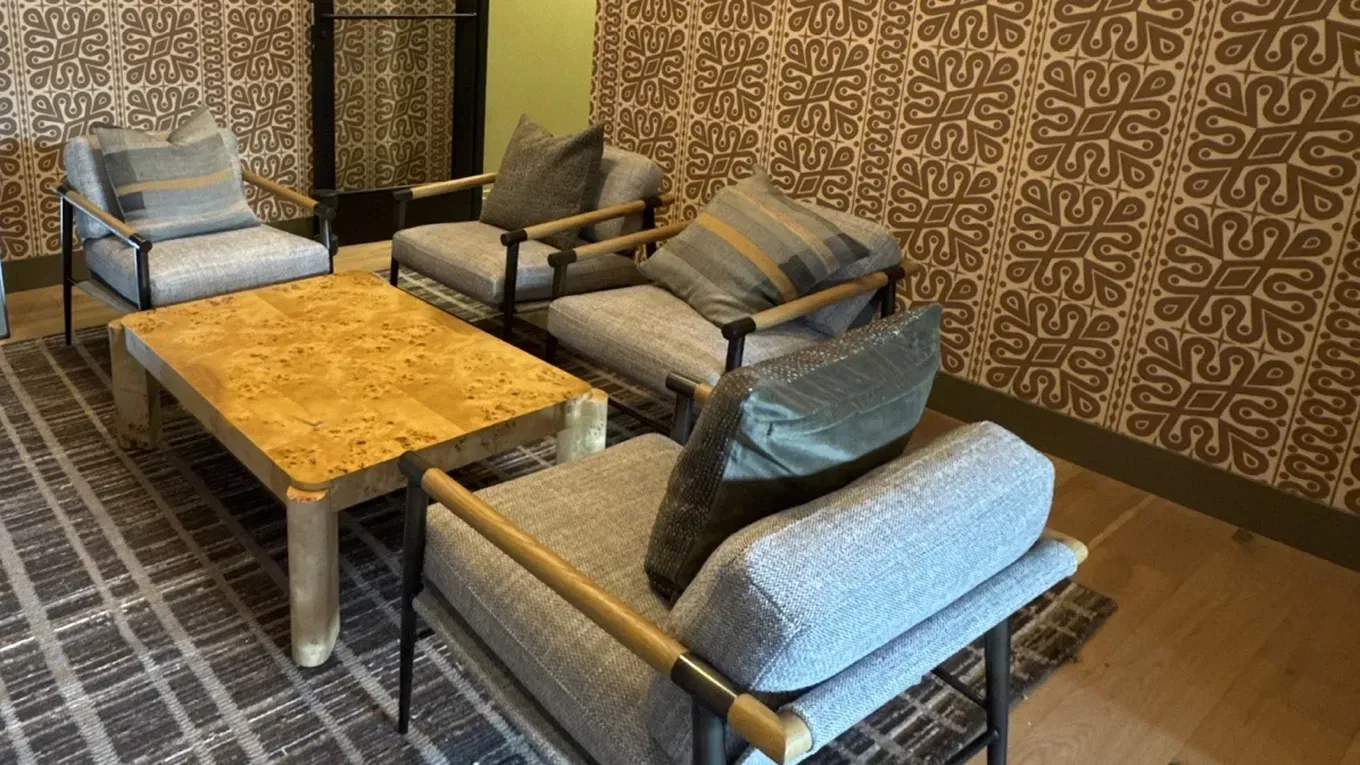
A few pieces sit on the border. Tables are often filed under case goods in the trade, especially coffee, end and console tables, though some makers list dining tables as a category of their own. Beds depend on the build: a wood or veneered platform and headboard is a case good, while an upholstered headboard counts as soft goods. If a vendor's line sheet and your own schedule disagree, follow the schedule, because that is how the order will be priced, tracked and delivered.
Have case goods on order for a hotel, a showroom or a client's home? Tell us what is shipping and when, and we'll respond within 24 hours.
Get a free quote →Case goods vs soft goods vs FF&E
These three terms nest inside each other. FF&E, furniture, fixtures and equipment, is the umbrella for everything movable that furnishes a commercial space. Within the furniture part of it, case goods and soft goods are the two halves; FF&E adds lighting, mirrors, art and electronics on top.
| Case goods | Soft goods | |
|---|---|---|
| What it is | Hard furniture built around a box | Upholstered and fabric items |
| Examples | Dressers, nightstands, desks, wardrobes, credenzas | Sofas, lounge chairs, upholstered headboards, mattresses, drapery, bedspreads, carpet and rugs |
| Main materials | Wood, veneer, engineered board, laminate, metal, stone, glass | Fabric, leather, foam, springs, padding |
| How it wears | Scratches and chips, but the structure lasts | Fades, stains and flattens sooner |
| How it usually ships | Heavy cartons or crates, sometimes flat-packed for assembly | Lighter, bulkier cartons or blanket-wrapped |
One warning on vocabulary. In retail, "soft goods" (or "softlines") means clothing, shoes, towels and bedding, and "hard goods" means durable products such as appliances, electronics and furniture. That is a different sorting system from the furniture trade's. When a hotel or a designer says soft goods, they mean the upholstery and textiles in a room, not a store's apparel department.
What are case goods in a hotel?
In a hotel, case goods are the hard furniture in the guest room and the public spaces: the headboard wall, nightstands, the dresser or TV unit, the desk, the closet unit and the luggage bench. Together they set the layout of the room, so they are usually the largest and most visible part of the furniture package on a new build or a renovation.
Hotel case goods are made for a harder life than home furniture. They are typically built from commercial-grade engineered wood, plywood or hardwood, faced with veneer or with high-pressure or thermally fused laminate that stands up to luggage, cleaning chemicals and spilled drinks. They are made to the hotel brand's design standard, in the quantity of the room count, often with outlets, USB ports or lighting built in. Projects often approve a mock-up room before the full run goes into production.
They also last longer than the textiles around them, which is why hotel renovations are split in two. A soft goods renovation replaces carpet, drapery, bedding and upholstery; a case goods renovation replaces the furniture itself. One hotel brand's 2025 franchise disclosure document, for example, requires soft goods to be replaced at least every seven years and case goods at least every fourteen. Your own franchise or management agreement sets your cycle.
Hotel vs home case goods
| Hotel (contract) case goods | Home (residential) case goods | |
|---|---|---|
| Who chooses them | The owner, the brand, the interior designer and a purchasing agent | The homeowner, often with a designer |
| Built to | A brand standard and heavy daily use by strangers | The owner's taste and ordinary household use |
| Typical surfaces | Laminates, sealed veneers, stone or glass tops, metal trims | Solid wood, veneers, lacquer, painted and hand-applied finishes |
| Quantity | Dozens to hundreds of identical sets, coded by room type | One piece or a few, often from several makers |
| Arrival | Truckloads from one or two factories, sometimes from overseas, on a production schedule | Separate deliveries from each store or maker, on each one's own date |
| Installation | Floor by floor, room by room, often with guests still in the building | One home, ideally in one visit |
The difference that matters most on delivery day is repetition against uniqueness. A hotel order is many copies of a few designs, so the risk is a set going to the wrong room or a shortage discovered on the fourth floor. A home order is a few one-off pieces, so the risk is a single damaged dresser that takes months to remake.
Materials and construction terms worth knowing
Line sheets and spec books for case goods use a vocabulary of their own. These are the terms that come up most:
- Solid wood: boards cut straight from the tree. Strong and repairable, but it swells and shrinks as the humidity changes.
- Veneer: a thin slice of real wood glued over a stable core. Most high-end case goods are veneered; it lets a maker match grain across a whole piece.
- Plywood, MDF and particleboard: engineered cores. Plywood holds screws best; MDF (medium-density fiberboard) gives a smooth face for paint and veneer; particleboard is the lightest and least costly.
- HPL and TFL: high-pressure laminate and thermally fused laminate, the hard-wearing surfaces common on hotel and office case goods.
- Edge banding: the strip that covers the raw edge of a panel. Loose banding is one of the first signs of rough handling.
- Joinery: how the box is held together, from dovetail and mortise-and-tenon joints to dowels, cam locks and screws.
- Drawer glides: the runners drawers slide on, such as side-mount, undermount and soft-close.
- KD (knocked down): shipped flat or in parts for assembly on site, the opposite of a fully assembled piece. The spec sheet or the vendor should say which.
Why case goods are easy to damage in transit
Case goods look sturdy, and a finished dresser is. In a truck, the same piece is a heavy box with fragile edges. Five things cause most of the trouble:
- Weight. A solid-wood dresser or a stone-topped credenza can take several people or proper equipment to carry, and every stairway, tight turn and elevator on the route has to be planned for it.
- Corners and tops. The finished top and the corners take the knocks. A crushed carton corner often means a chipped veneer corner inside.
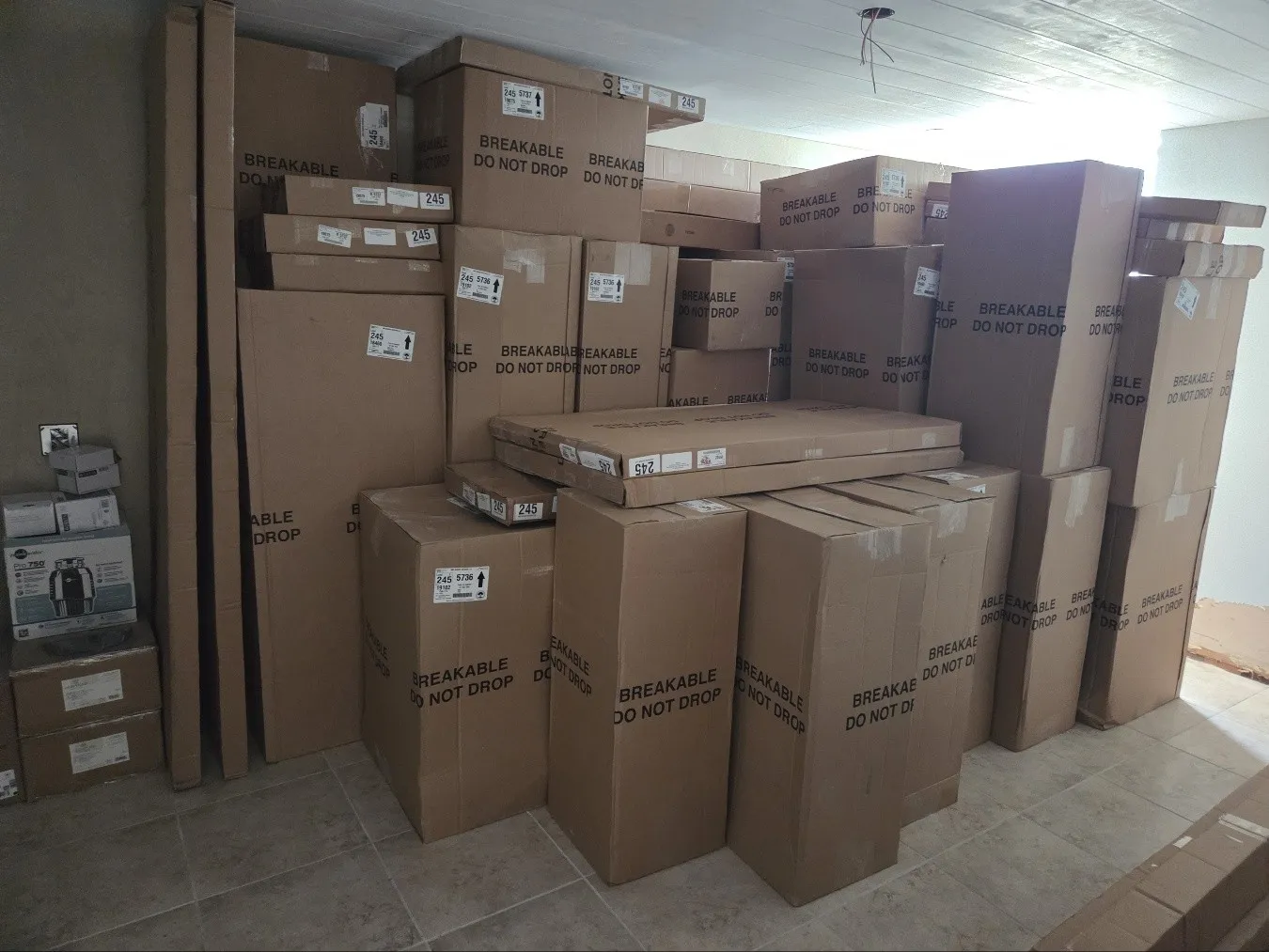
- Hidden damage. Most case goods arrive in cartons or crates, so a cracked panel or a broken glide can sit unseen until the box is opened. Our guide to furniture that arrives damaged explains what to do when that happens and why the clock matters.
- Moving parts. Drawers, doors, glass shelves and stone tops shift if they are not secured, and hardware packs go missing from KD cartons.
- Tipping. Tall, top-heavy pieces can fall forward. Dressers, armoires and wardrobes sold for homes in the US now have to meet a federal stability standard, and the Consumer Product Safety Commission recommends anchoring them to the wall. Ask the installer to fit the anti-tip hardware that comes with the piece.
A dresser that leaves the factory perfect can still arrive with a split corner. The packaging tells you where to look, which is why it should be checked and photographed before anyone signs for it.
Getting case goods from the factory to the room
For a hotel, a showroom or a whole house, the safest path for case goods runs through a receiving warehouse rather than straight to the site. This is how we handle them:
- One delivery address for every maker. Each vendor ships to our warehouse under your project name. Every carton or crate is barcoded, photographed as it comes in and checked against the list you sent us. We ask for the bill of lading so we know what each vendor actually loaded.
- You decide about damaged packaging. If a carton arrives crushed or torn, we tell you before it goes into storage, and you choose whether we open it. Any carton can be opened and its contents inspected when you ask, at no charge, which is worth doing for one-off and long-lead pieces.
- Climate-controlled storage. Wood and veneer react to heat and humidity, so case goods wait in climate-controlled, secured space until the rooms are ready, with no minimum period.
- Room-by-room release. On a hotel project, sets are released in install order and matched to the room numbers on your schedule. Our receiving warehouse for hotels page covers that step, and our FF&E logistics page covers the whole package.
- Careful placement. Crews protect the route through the building, move heavy pieces with professional equipment, then place, assemble and level each piece and mount what hangs on the wall, such as headboard panels and mirrors. Packaging leaves with the crew. Our white glove installation page describes the install side.
The same approach works for a single home. For a family home in Alamo, California, a design firm routed 82 pieces from many makers, case goods among them, to our Hayward warehouse, and everything was installed in one day. Furniture makers who ship to designers and hotels can send production to our receiving warehouse for furniture manufacturers, so finished pieces have somewhere safe to wait for the site.
Elite Anywhere receives case goods at 34 warehouse locations, 10 of them our own staffed hubs, Monday to Friday from 9am to 3pm, by appointment. Send us the order list and the install dates, and we'll respond within 24 hours.
Quick answers
What are case goods in a hotel?
What are considered case goods?
What does "casegoods" mean?
What is the difference between case goods and soft goods?
What are hard goods vs soft goods?
Is a bed a case good?
Are case goods the same as FF&E?

Director of Operations at Elite Anywhere. Elite Anywhere runs receiving, storage, white-glove delivery, and installation for designers, brands, and private clients nationwide.
Explore Guides & Ideas →