Your Building, Ready for Delivery: Certificate of Insurance, Elevators and Stairs
The building decides more about delivery day than the delivery company does. Here is what to ask management, what has to be booked before the truck arrives and how to measure the full route.
 White Glove & Delivery
A certificate of insurance for delivery is the document most managed apartment, condo and co-op buildings ask for before they let a delivery crew through the door. The building also controls the freight elevator, the loading dock and the hours a crew may work. This guide covers that side of a delivery: what to ask management, what has to be booked and by whom, and how to measure the route for a large piece such as home-gym equipment, an oversized sofa or a framed mirror.
As soon as you have a delivery date, ask your building what the certificate of insurance must show, when it is due and how the freight elevator and delivery windows are booked. Send those details, with measurements of the full route, to your delivery company when you book.
Start with one call to building management
Most of what can stop a delivery at the door is decided by the building. One call to the managing agent, building manager or superintendent answers nearly all of it:
- Insurance: does the building need a certificate of insurance, what must it name, and how far ahead is it due?
- Elevator and hours: how is the freight or service elevator reserved, and are deliveries limited to set days or times?
- Entrance: should the crew use a loading dock, a service entrance or the front door, and where can a truck stop?
- Front desk: which staff member needs the crew's details, and by when?
Get the answers in writing and send them to your delivery company when you book, so the crew knows the rules before it reaches the lobby.
The certificate of insurance: what the building asks for and when
A certificate of insurance, or COI, is a one-page summary from the delivery company's insurer showing that it carries liability coverage. If a crew damages an elevator, a hallway or a neighbor's door, the building has a business policy to claim against, not your renters or homeowners policy. The certificate usually has to show:
- The certificate holder: the building owner or the management company, named exactly as they give it to you.
- Additional insureds: often the owner, the managing agent and related companies, so the building is covered under the policy rather than just mentioned on it.
- Coverage limits: the amounts the building sets. Many New York City buildings ask for more than the state minimum, so a standard certificate may not pass.
- Policy dates: the coverage has to be active on the delivery date.
Who to ask. Ask management for its written requirements or a sample certificate it has accepted, and forward it to your delivery company. Elite Anywhere files the certificate with the building; send us the requirements when you book.
How far ahead. Brick Underground advises getting the completed certificate to management at least one day before the delivery, and some buildings set an earlier deadline. Ask for yours. A misspelled owner name means a reissue, and without an accepted certificate a delivery is turned away at the door and rebooked.
Building asking for a certificate of insurance? Send us its requirements and your delivery date, and we'll respond within 24 hours.
Get a free quote →Freight elevators, delivery windows and the front desk
The freight elevator and the delivery window are booked with the building separately from the certificate: an accepted certificate does not hold an elevator. You can reserve them yourself, or Elite Anywhere will book them with your building for you.
- Get the reservation in writing. Whoever books it, confirm the date, the start and end time, and whether the elevator is yours alone or shared with other deliveries that day.
- Fit the delivery inside the window. The truck should arrive with time to finish, not at its edge, so if you booked the window, give your delivery company the exact times.
- Tell the front desk. Give the doorman or concierge the date, the window and the company name. Elite Anywhere texts you about 30 minutes before the crew arrives, which is the moment to let the desk know.
- Plan for a mismatch. If your goods are ready before the building can take them, Elite Anywhere can receive them at its warehouse and hold them in climate-controlled storage until your window opens.
Loading docks, walk-ups and stairs
Where the truck stops sets the length of the carry. Ask whether the building has a loading dock, whether it has to be booked, and where a truck may stand if there is none. If the only option is the street, tell your delivery company; a long carry from the curb changes the plan.
In a walk-up, the stairs are the route. Before you book, count the flights, note every landing where the stairs turn, and measure the headroom at each turn, because a piece that clears the stairwell's width can still catch on a low ceiling. Put it all in your quote request. Elite Anywhere sizes each crew to the job and uses professional moving equipment for heavy items, but a piece that cannot make a turn has to come apart or find another way in, and that is better known at quote time.
Measure the full route, not just the room
Measure the item in its packaging, then every point it has to pass between the truck and the spot where it will stand. The room is rarely the problem; the tightest point on the way there usually is.
| Point on the route | What to measure |
|---|---|
| Building entrance and security doors | Clear width with the door fully open |
| Elevator cab | Door width, interior depth and height, and the diagonal from the floor to the opposite top corner |
| Hallways | Width, and the space available at each corner |
| Stairs and landings | Width, headroom, and the turning space on each landing |
| Your front door | Clear width with the door open, since hinges and trim take more than you expect |
| The room's doorway | Width, height, and what sits just inside it |
- Home-gym equipment. Treadmills, cable machines and racks are heavy and often tall, and can arrive in several boxes to be assembled in the room. Check every box against the elevator cab and the stair turns. Our gym equipment delivery page covers what a crew plans for.
- Oversized furniture. Sectionals, beds and dining tables usually turn through a doorway on end, so measure the piece's diagonal as well as its length.
- Art and mirrors. Large framed pieces travel upright, so the cab's height and diagonal matter more than its floor space. If the piece is going on the wall, say so when you book: Elite Anywhere's crews can hang art and mount mirrors.
When a measurement is close, send photographs of each tight point, taken from the side the piece will approach. A crew can plan around a turn it has seen in a photo, not one it first meets on the day.
Protecting floors, walls and finishes
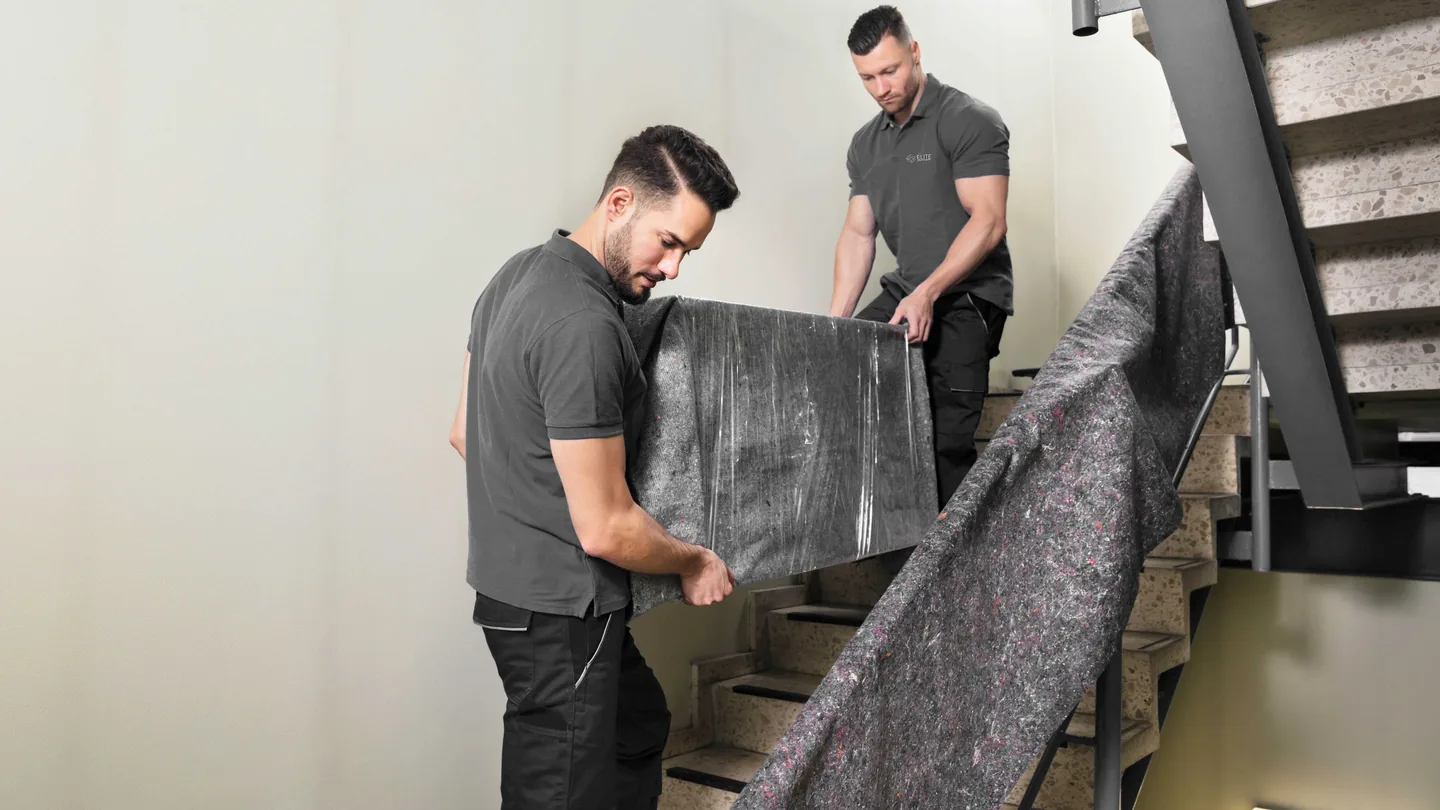
On an Elite Anywhere delivery, blankets and coverings go on railings, doors and anywhere the delivery will pass before anything moves, and the boxes, blankets and wrapping leave with the crew afterward. Your part is the route itself:
- Clear the path of rugs, side tables, plants and anything else the crew would have to step around.
- Take down art and mirrors on narrow hallway walls, where a turning piece comes closest.
- Photograph the route before the crew arrives, so marks that were already there are on record.
- Ask the building whether it requires its own elevator pads or hallway runners, and who puts them up.
The crew photographs the piece's condition at delivery, and you are asked to report any damage before they leave, so check the piece and the route while they are there.
New York and other dense cities
All of this applies most in New York. Brick Underground notes that New York City buildings usually require a certificate of insurance for furniture deliveries and contractors, and often want a mover's certificate before a move is approved at all. In practice the building, not the drive, decides whether a New York delivery happens on schedule.
Elite Anywhere's New York warehouse is in Long Island City, minutes from Midtown across the Queensboro Bridge and the Queens-Midtown Tunnel. Goods can be held there until your elevator window, then carried to the room you choose; our New York white glove delivery page has more. The order of work is the same at Elite Anywhere's staffed hubs in Los Angeles, San Francisco, Washington DC and Miami: the certificate, the elevator and the window are settled with the building first.
Your delivery-prep checklist
- When you have a date: call management and get the certificate requirements, elevator rules and delivery hours in writing.
- When you book: send your delivery company those requirements, the route measurements and photos of every tight point, and say whether you have reserved the elevator or want it booked for you.
- Before the building's deadline: confirm management has received and accepted the certificate.
- The day before: reconfirm the elevator, brief the front desk and clear the route.
- On the day: keep your phone on for the arrival text, walk the route with the crew, and check the piece and the route before they leave.
Choosing a service level is a separate decision: room of choice delivery carries a piece to the room you name, and white glove delivery adds unpacking, assembly, placement and packaging removal. When the building is the hard part, our white glove service covers the carry, the setup and the cleanup.
Quick answers.
What is a certificate of insurance for delivery?
Who provides the certificate of insurance for a delivery?
What happens if a delivery arrives without a certificate of insurance?
How far in advance should I reserve a freight elevator?
How do I know if furniture or gym equipment will fit through my building?

Director of Operations at Elite Anywhere. Elite Anywhere runs receiving, storage, white-glove delivery, and installation for designers, brands, and private clients nationwide.
Explore White Glove & Delivery →