
1
Step 1


Private Households // White Glove Moving
Published January 13, 2025
Written by EA Support Team
Read Time Approximately 15 minutes

Moving a refrigerator is often one of the trickiest parts of any home move. Aside from it being a bulky appliance, the most complex part of moving a fridge is what you can’t see. Even just tilting a fridge to a certain angle can become a huge problem.
The right tools and a smart strategy usually prevent a broken fridge, a damaged floor, or a personal injury. Whether you’re moving nearby, to a new state, or even across the country, knowing the best practices for safely relocating your refrigerator can save you thousands in repairs or replacement costs. From preparing the appliance to hiring experienced movers, understanding how to move a fridge properly ensures a smooth, stress-free transition for every household.
What You’ll Learn:
No. Refrigerators typically weigh between 300-400 pounds, depending on size and model. Attempting to tilt or balance that much weight on a dolly without a spotter is a recipe for a crushed foot, a thrown-out back, or a shattered kitchen floor. Moving a refrigerator is technically possible as a DIY project with escorts, but it comes with significant risks. Here’s a quick comparison:
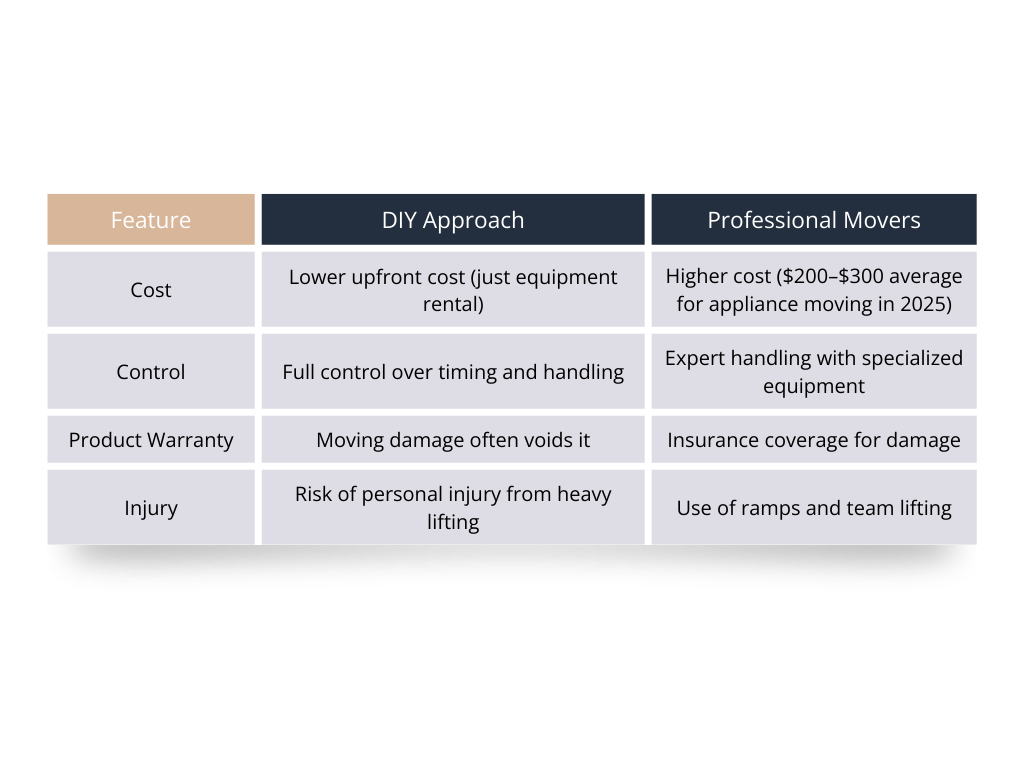
On your own, it can be challenging and risky, so it’s best to call certified movers. The cost of furniture shipping services is often far less than the cost of repairing or replacing a damaged appliance.
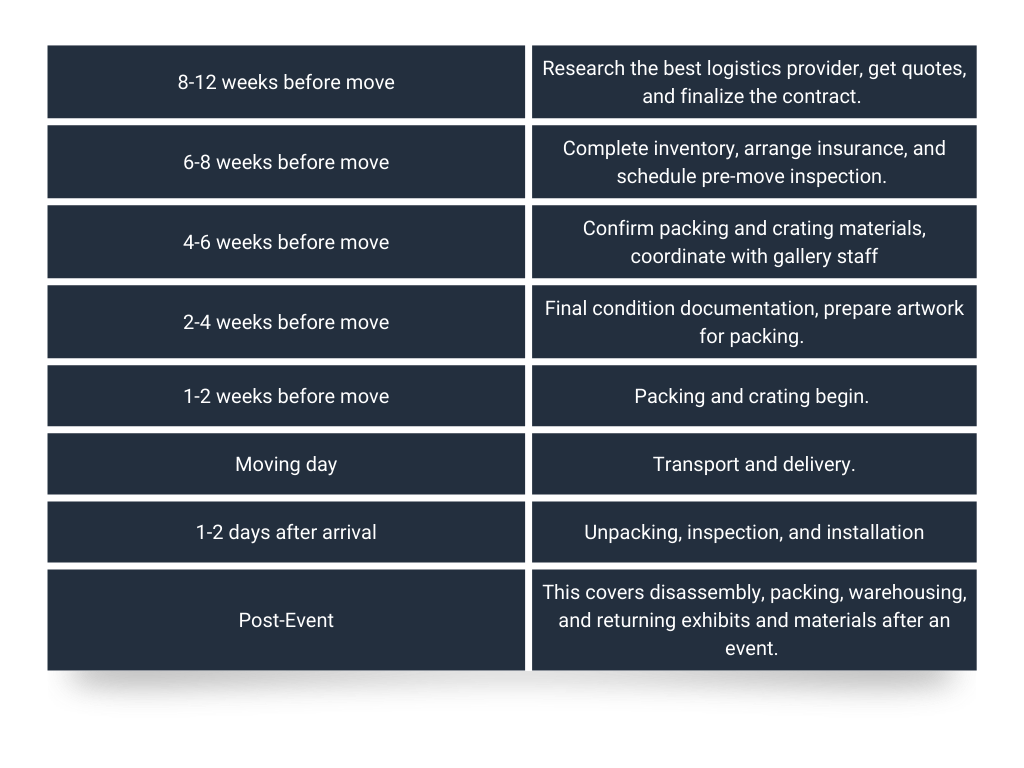
Respect for project timelines is important when coordinating with gallery schedules and exhibition openings. Exhibition preparation takes up to 9-12months. To accommodate last-minute changes and special requests, this scheduling minimizes risks associated with production delays. For logistics alone, here’s the recommended timeline to follow:
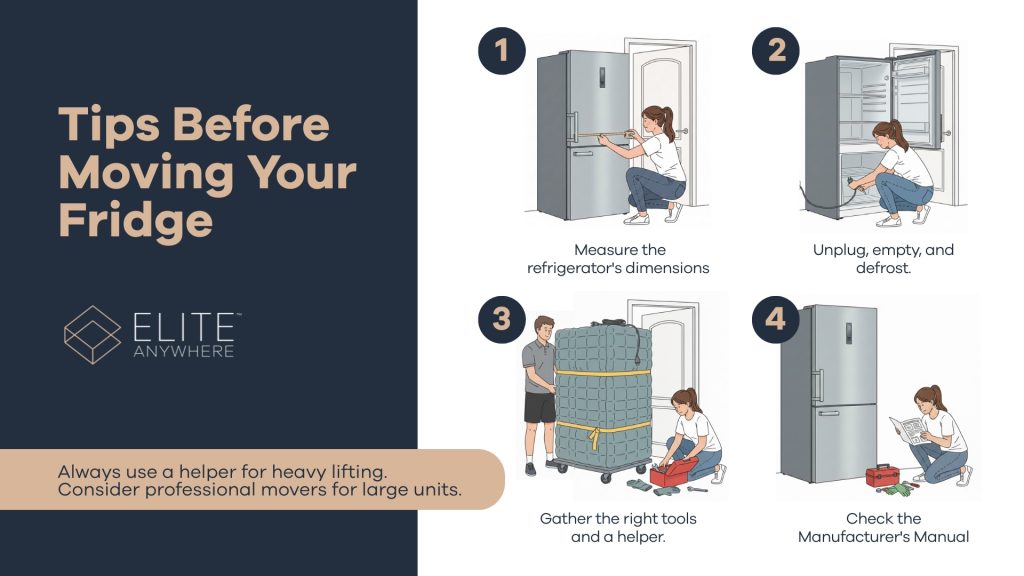
Proper preparation is the foundation of a successful refrigerator move. Use this checklist to ensure you’re ready before moving day arrives.
For safety, it’s best to check the Manufacturer’s Manual to review transport and moving guidelines specific to your model. Note any special handling requirements and check warranty terms.
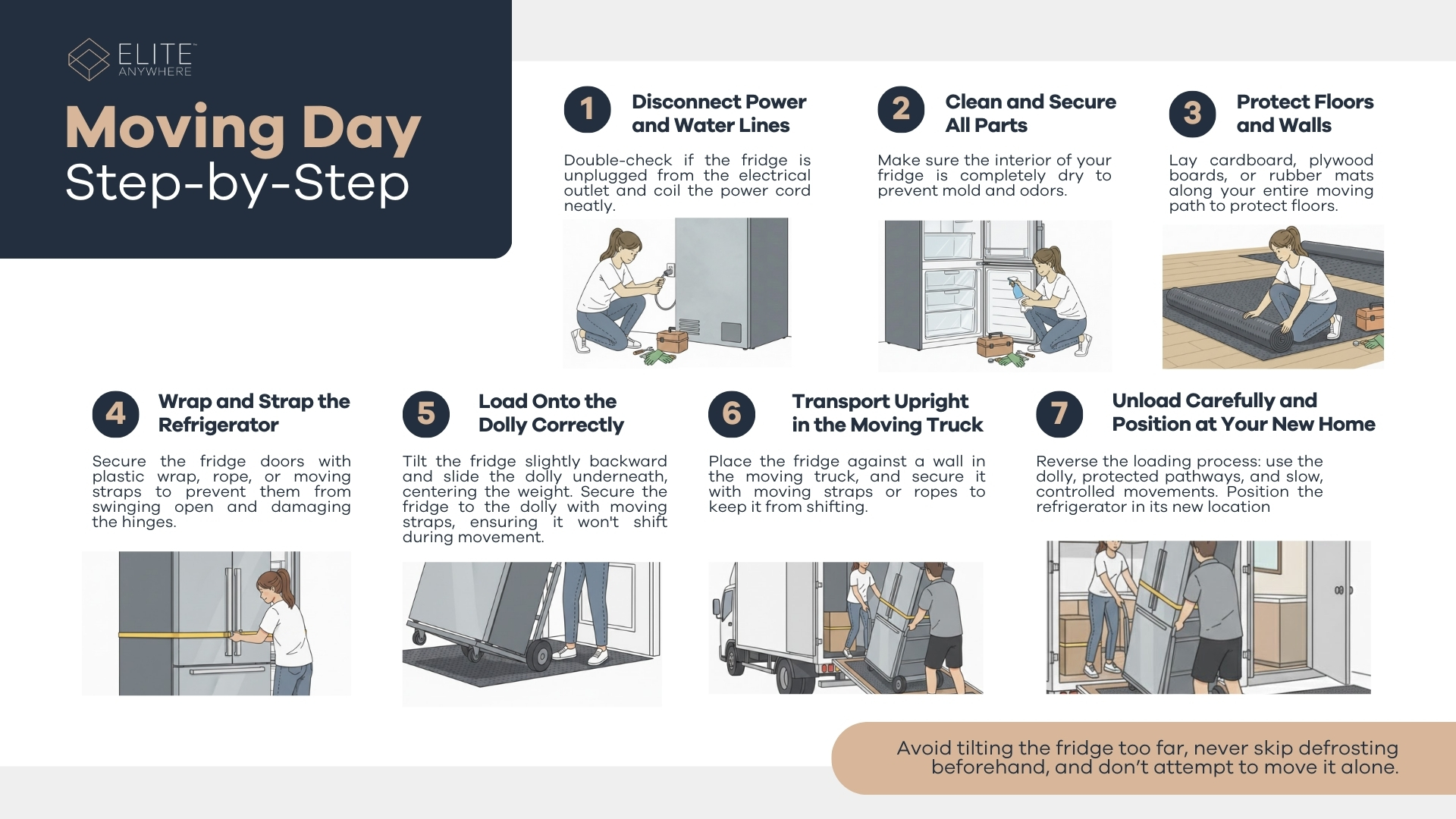
Follow these seven essential steps to move your refrigerator safely and efficiently.
Double-check if the fridge is unplugged from the electrical outlet and coil the power cord neatly, securing it to the back with tape to avoid any tripping hazards during the move. If your fridge has an ice maker or water dispenser, locate the water line connection, usually at the back or bottom, turn off the water supply valve, and carefully disconnect the line.
Make sure the interior of your fridge is completely dry to prevent mold and odors.
Lay cardboard, plywood boards, or rubber mats along your entire moving path to protect floors from scratches and dents.
Wrap the back and sides with moving blankets or furniture pads to prevent fridge damage and your home.
Secure the fridge doors with plastic wrap, rope, or moving straps to prevent them from swinging open and damaging the hinges. Then wrap the entire refrigerator in moving blankets, taping them firmly and giving extra attention to corners and the exposed coils at the back for maximum protection.
Position the appliance dolly at the side of the refrigerator (not the front or back). Tilt the fridge slightly backward and slide the dolly underneath, centering the weight. Secure the fridge to the dolly with moving straps, ensuring it won’t shift during movement.
Important: Lift with your legs, not your back. Take small, controlled steps and avoid sudden movements or jerking motions.
Always keep the refrigerator upright during transport, as tilting or laying it down can cause compressor oil to leak into the cooling lines, permanently damaging the appliance. Place the fridge against a wall in the moving truck, and secure it with moving straps or ropes to keep it from shifting.
If lying down is unavoidable: Consult your manufacturer’s manual for specific guidelines. If you do lay it down, wait at least 24 hours before plugging it in to allow fluids to settle.
Reverse the loading process: use the dolly, protected pathways, and slow, controlled movements. Position the refrigerator in its new location, ensuring it’s level and has proper ventilation (typically 2–3 inches of clearance on all sides).
Helpful Information: How to Move a Fridge in 7 Steps.
Avoid tilting the fridge too far, never skip defrosting beforehand, and don’t attempt to move it alone.
Proper setup after moving is just as important as the move itself. Take your time and follow these steps to ensure your refrigerator works as it did before the move.
Leave the heavy lifting to our certified movers. Book your refrigerator or freezer move now!
Not every refrigerator is worth moving, and there are two main reasons.
Long-distance moves. Interstate relocations can make transporting a fridge expensive and the move challenging. In many cases, purchasing a new appliance after your move is the more practical and cost-effective option. Generally, refrigerators are often not worth moving when the relocation exceeds 100-150 miles, especially if they need to be transported either by air or in tight truck space.
Moving a refrigerator requires careful planning, proper equipment, and attention to detail. Remember to plan, move with caution, and follow the above safety tips.
If you’re unsure about moving your refrigerator yourself, Elite Anywhere’s professional movers can handle heavy appliances safely and efficiently. Our team specializes in valuable moving with a proven track record of <1% damage rate. We ensure your fridge arrives at your new home in perfect condition.
Most manufacturers advise against laying a refrigerator on its side or back. This can cause compressor oil to seep into the cooling lines, permanently damaging the appliance.
It’s best to wait for 24 hours before plugging it in. This allows internal fluids and compressor oil to settle properly.
It does not automatically void the warranty. Make sure that the manufacturer’s manual guidelines for proper handling are followed.
Standard moving insurance may not cover appliance damage. Better ask your moving company about appliance-specific coverage.
Start by making sure the fridge has been plugged in for at least 2-3 hours. Take a moment to check that the condenser coils are clean and that air vents are not blocked. If the fridge still isn’t cooling properly, reach out to the manufacturer or a repair professional.

Moving a heavy appliance like a refrigerator doesn’t have to be stressful. Contact Elite Anywhere today for a free quote on professional appliance moving services. Our skilled movers have the tools for full relocation and setup. Get your moving quote today!

A complete end-to-end logistics company. From receiving to last-mile delivery and everything in between, our staff delivers a true white glove experience with meticulous care and attention to detail. Need something pickup up, crated, and delivered - anywhere in the world? Let's get started!
1
Step 1
keyboard_arrow_leftPrevious
Nextkeyboard_arrow_right