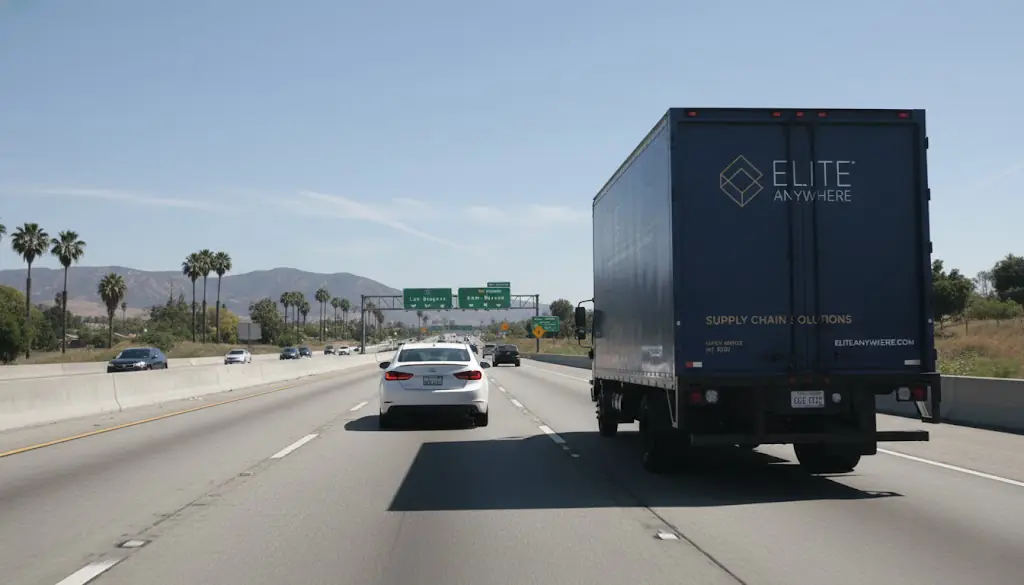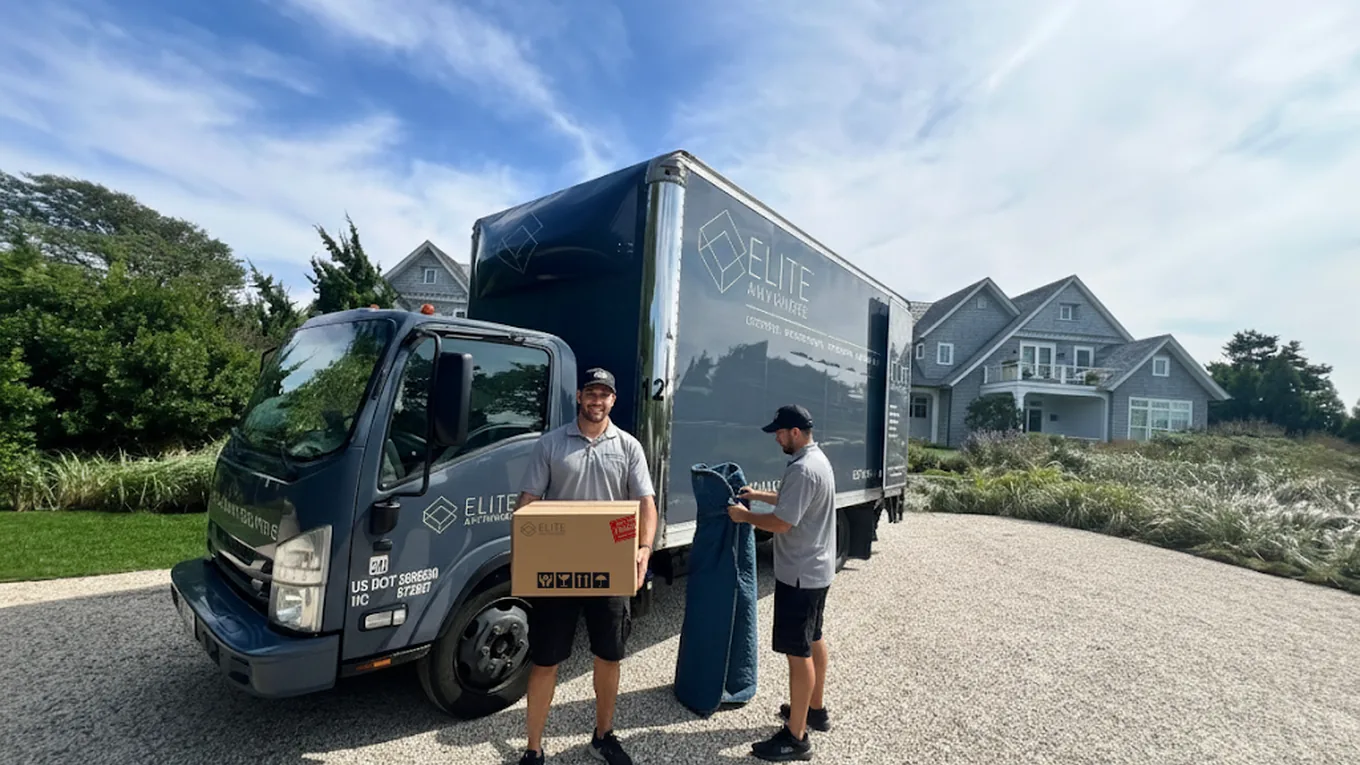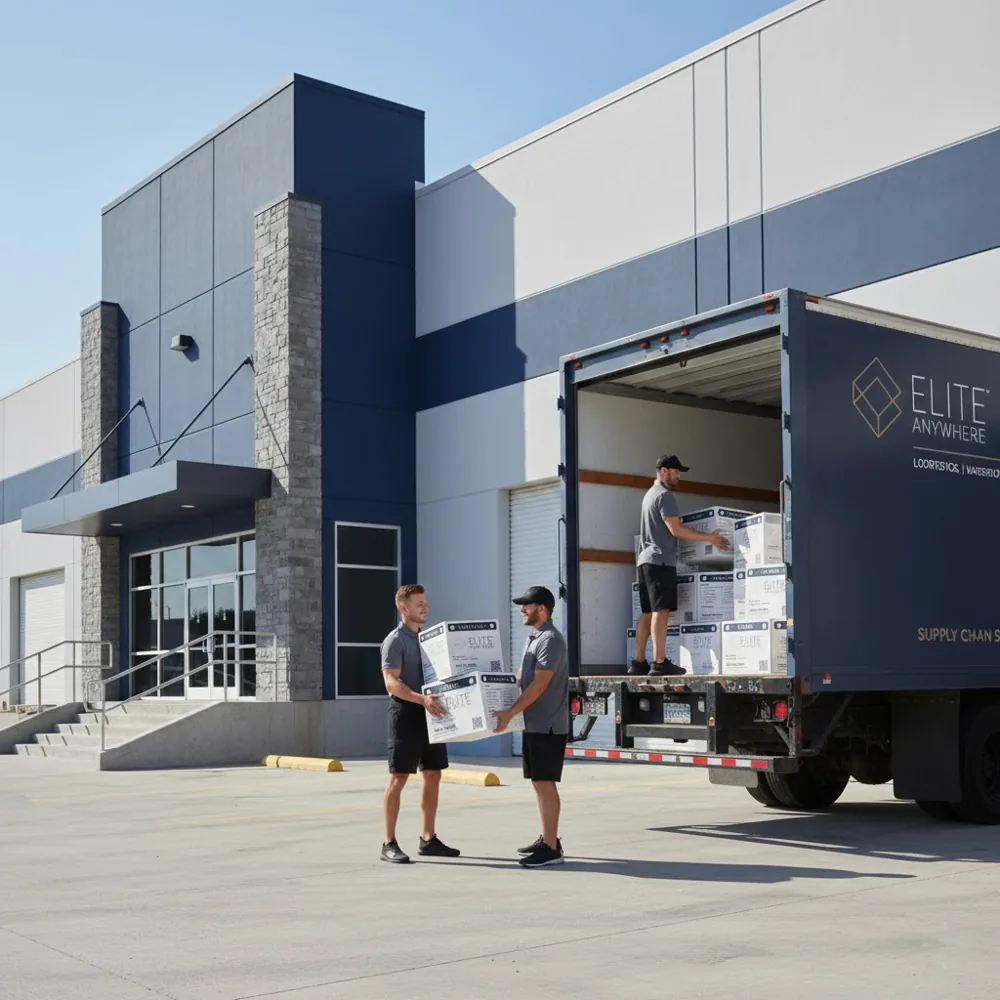
What Is Last Mile Delivery?
The last mile is the final leg from a local facility to your door — and it's the slowest, priciest, and most visible part of the whole journey. Here's how it works, who actually delivers it, how to track it, and why big items are a different job entirely.

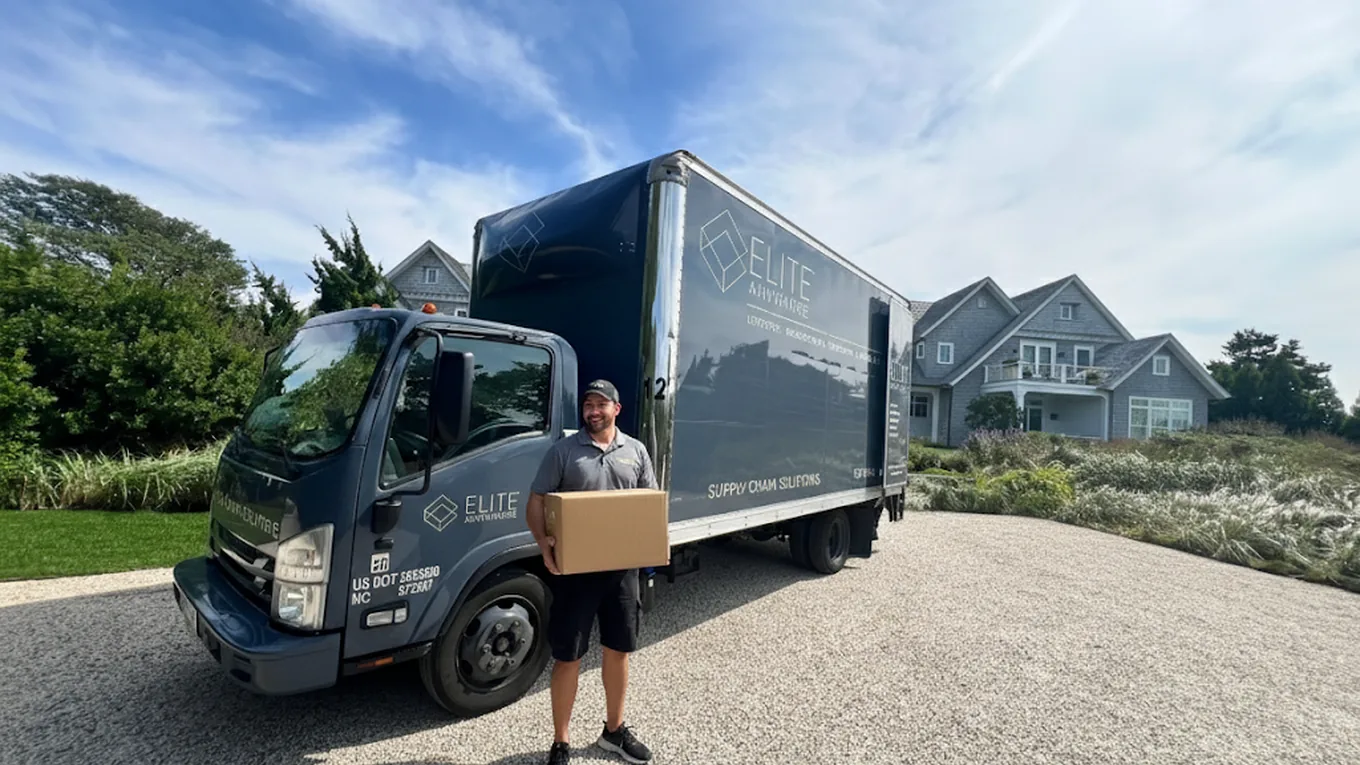 Shipping & Freight
What is last mile delivery? It's the final leg of a shipment's journey — from the local facility or distribution center nearest the customer, to the customer's actual door. It's the shortest stretch of the whole route and reliably the most expensive, the slowest per mile, and the only part the customer ever sees. Everything before it happens out of sight; the last mile is the bit they judge you on.
Last mile delivery is the final step in the shipping chain: moving goods from a local hub to the end customer's address. It's the most expensive segment because each stop serves one address instead of a full pallet or truckload — and it's where delays, damage, and failed deliveries actually happen.
Is last mile the same as final mile?
Effectively, yes — they describe the same leg of the journey, and the industry uses both. "Final mile" tends to appear more in freight and B2B contexts, particularly around big-and-bulky goods and scheduled deliveries, while "last mile" is the more common term in parcel and ecommerce.
Neither is a literal mile. The last mile can be two blocks in a dense city or forty miles into a rural area — the phrase describes the final stage, not a distance.
How last mile delivery works
By the time a shipment reaches the last mile, it has usually already crossed most of its distance. The final leg looks like this:
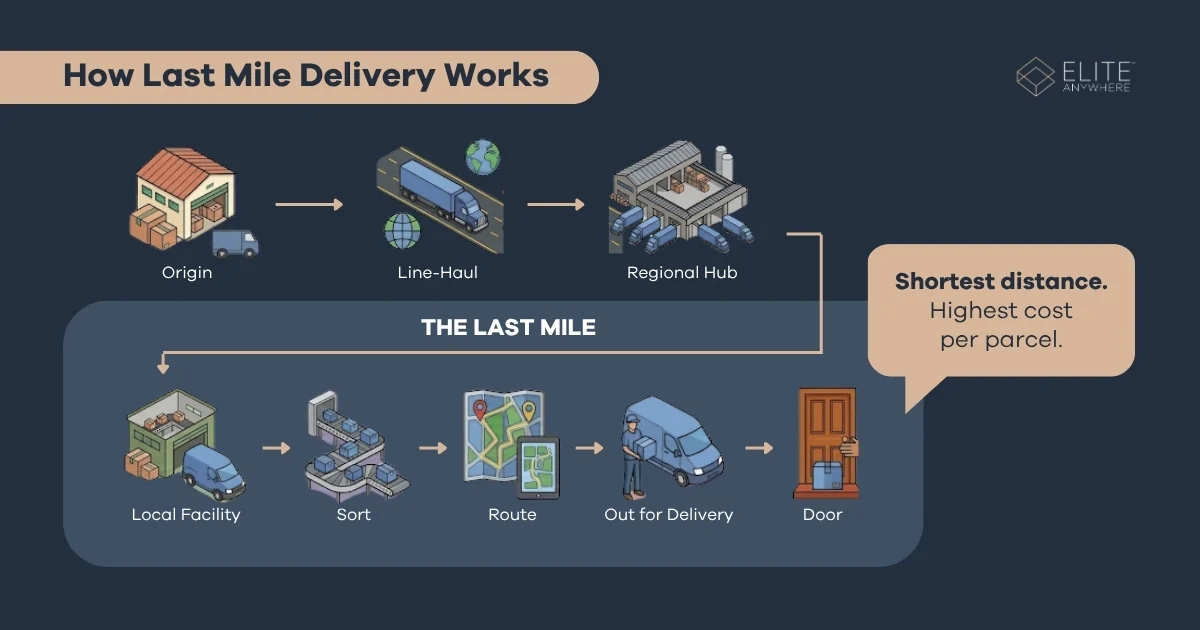
- Arrival at a local facility — the shipment reaches the depot, hub, or cross-dock nearest the delivery address.
- Sortation — items are sorted by delivery route rather than by destination city.
- Route planning — stops are sequenced, factoring in time windows, vehicle capacity, and access constraints.
- Out for delivery — the item is loaded onto the vehicle that will actually bring it to the door.
- Delivery and proof — handover, with a signature, photo, or scan recorded as proof of delivery.
For big or fragile goods there are extra steps: a scheduled appointment window, a two-person crew, and often assembly or installation at the door rather than a drop and go.
Need a last-mile partner for big, fragile, or high-value items? Get a fast, free quote — no obligation.
Get a free quote →Who delivers last mile packages?
More companies than most people expect, and often not the one whose name is on the tracking page:
- National carriers — UPS, FedEx, and USPS handle the last mile on a large share of parcels.
- Retailer-operated networks — large retailers increasingly run their own delivery fleets and contracted driver networks.
- Regional and local carriers — specialists covering a metro or state, frequently subcontracted by bigger networks.
- Specialist big-and-bulky carriers — for furniture, appliances, and fitness equipment, where two-person crews and in-home placement are needed.
- Gig and crowdsourced drivers — common for same-day and local delivery.
This is why a shipment can start with one carrier and finish with another. USPS in particular often performs the final delivery for parcels that traveled most of their journey with a different carrier — a handoff arrangement that's completely normal, and the reason tracking sometimes switches carriers partway through.
Why the last mile costs the most
The economics invert on the final leg. Line-haul moves thousands of units at once; the last mile moves one order to one address. Four things drive the cost:
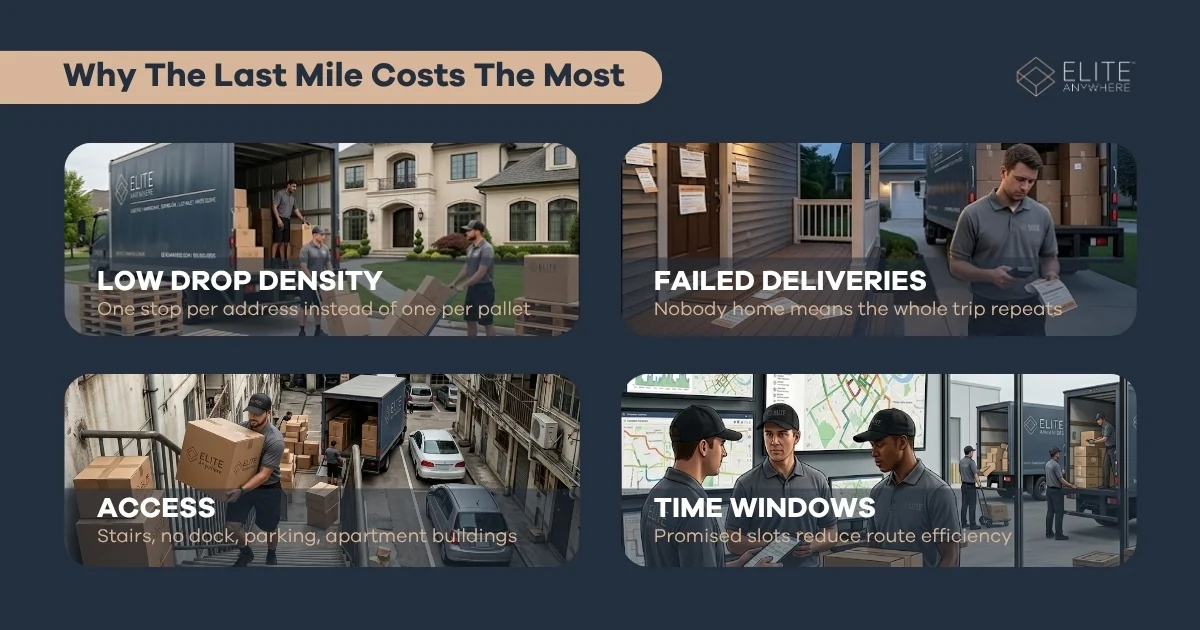
- Low drop density. A truck making 80 stops across a suburb covers far more time and fuel per item than one delivering 20 pallets to a single warehouse.
- Failed deliveries. Nobody home means the whole trip repeats — the single most expensive event in last-mile logistics.
- Access. Stairs, apartment buildings, no loading dock, and nowhere to park all add minutes that multiply across a route.
- Time windows. Promising a customer a slot makes routes less efficient by definition.
That's also why it's where most damage and most complaints occur — more handling, more human variables, and an audience watching.
Tracking your last mile delivery
Last-mile tracking is the visibility layer over that final leg: the scans, status updates, and often a live map or delivery window on the day itself.
A few things worth knowing when you're watching a shipment:
- "Out for delivery" means it's on the vehicle — it should arrive that day, but the position in the route decides whether that's 9am or 7pm.
- A carrier change mid-journey is normal. If tracking hands off to a regional carrier or USPS near the end, that's the last-mile leg starting, not a problem.
- A new tracking number is common on that handoff, which is why a parcel can appear to go quiet before it reappears locally.
- Proof of delivery — a photo or signature — is your evidence if something goes missing. Save it.
If tracking stalls for several days at a local facility, contact the final carrier rather than the original seller. The seller can't see more than you can at that stage.
Last mile for big and bulky items
Almost everything written about the last mile assumes a parcel that fits on a porch. Furniture, appliances, fixtures, and equipment are a different job, and the differences are the whole reason specialist carriers exist:
- Two-person crews, because one person cannot safely carry a sofa up a staircase.
- Scheduled appointment windows rather than a drop-and-go, because someone has to be there.
- Access assessment before the day — doorway widths, stair turns, lift dimensions, parking.
- Placement, assembly, and debris removal — the item isn't delivered until it's where it belongs and working.
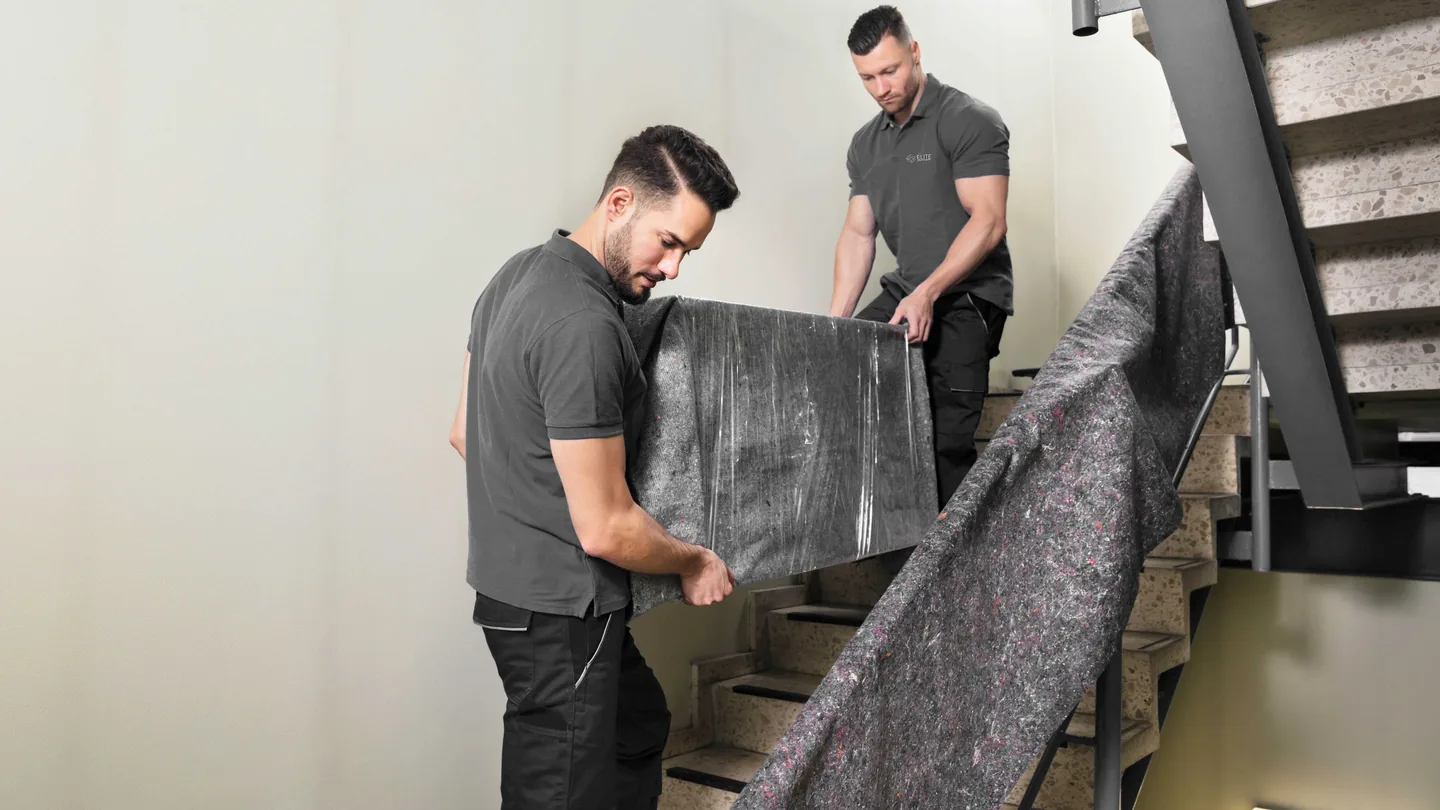
- Protection on the item and the property — floor coverings, blanket-wrapping, door jamb protection.
This is the segment we operate in, and the receiving discipline behind it matters more than the truck. Every item is photographed and cross-checked against the list the client sent us when it arrives at our warehouse, and a carton logged as one line can hold six chairs — so any client who wants the contents counted asks for an inspection and we open the cartons. See how we handle it in our last-mile delivery solution, and our guide to choosing a furniture delivery service for the in-home side.
Choosing a last mile partner
If you're selecting a provider rather than tracking a parcel, the questions that actually separate them:
- Do they handle your product type? Parcel networks and big-and-bulky carriers are not interchangeable.
- Do they schedule appointments, and how do they communicate them?
- What happens on a failed delivery — who pays for the re-attempt, and how fast is it rescheduled?
- Is placement and assembly included, or is it curbside?
- What visibility do you and your customer get — tracking, proof of delivery, photo evidence?
- How are damage claims handled, and is condition documented at receiving rather than only at delivery?
For a fuller picture of where the last mile sits in the wider journey, see door-to-door shipping, and expedited shipping for when speed on that final leg is the priority.
Quick answers.
What is meant by last mile delivery?
Who delivers last mile packages?
Does USPS do last mile delivery?
How do I track my last mile delivery?
Is last mile the same as final mile delivery?
Why is last mile delivery so expensive?
What is last mile delivery for furniture?
Director of Operations · Freight & Last-Mile Logistics at Elite Anywhere. Elite Anywhere runs receiving, storage, white-glove delivery, and installation for designers, brands, and private clients nationwide.
Explore Shipping & Freight →